
Educational 4 min read
Gi or no-gi: which should a beginner start with?
Beyond the Mat
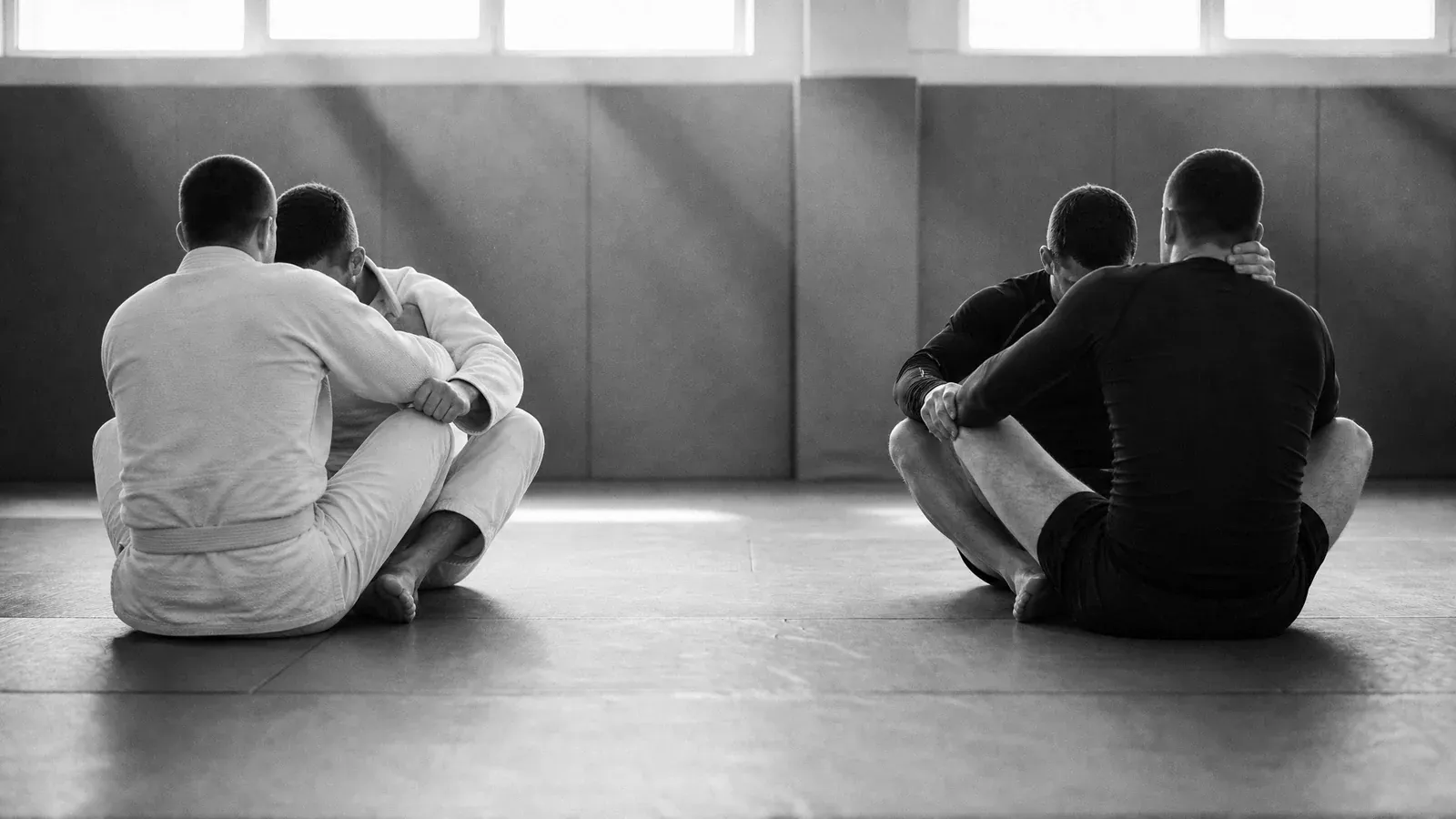
Gi or no-gi. Which one is “real” BJJ?
Every white belt asks this within their first month, usually after trying one, watching the other on Instagram, and quietly wondering whether the other one even counts.
It counts. They are the same game with the grips removed. Here is what actually changes, and how to choose.
What the gi changes
In the gi you hold cloth. Collars, sleeves, lapels, the trousers. Cloth does not slip and does not sweat, so once you have a grip you tend to keep it.
That has consequences all the way through the game. Control lasts longer, so positions are held for longer and the pace is slower. There is more time to think, which is why a lot of coaches like beginners to start here. Submissions come from the collar and the sleeve as well as the joints, and the jacket does a fair amount of the work for you: a collar choke uses your opponent’s own gi against them.
The cost is complexity. There are many more grips to learn, many more ways to be controlled, and a whole set of chokes and guards that only exist because of the fabric. Spider guard, lapel guards, most of the collar chokes. None of them exist without the gi.
What no-gi changes
In no-gi you hold body. Wrists, necks, underhooks, the back of the head, the ankles. Bodies are slippery and sweaty, so grips break constantly and positions have to be re-established over and over.
Everything is faster. Control is harder to keep, so there are more scrambles, and athleticism counts for a bit more. The game shifts towards the legs and the back, because those are the places where control survives when the friction disappears. Leg locks are a much bigger part of no-gi for exactly this reason.
The cost is the opposite one. There is less to hold onto and less time to think. Beginners in no-gi often feel that everything is happening at once, because it is.
What does not change
Almost everything that matters at white belt.
The positions are identical. Mount is mount, side control is side control, guard is guard. The hierarchy of positions is the same. Frames work the same way. Hip movement is the same. The concept behind a sweep, breaking their base while keeping yours, is identical. The concept behind a pass, getting your hips past their knees once their legs cannot follow, is identical.
If you understand a position, you understand it in both formats. Only the grips change. That is worth remembering when someone online tells you that one format is fake. They are usually arguing about grips.
Which should you start with
The honest answer is: whichever one your club runs most often on the nights you can actually attend. Turning up twice a week for a year matters more than the format you turn up in, by a long way.
If you have a real choice, here is how we would think about it.
Start in the gi if you want time to think. The slower pace, the longer holds and the extra friction give a beginner more chance to notice what is happening. You will also learn grip fighting properly, which transfers even when the grips do not.
Start in no-gi if you want to compete in submission grappling or you have an MMA background or ambition. The pace will feel more natural and nothing you learn will be format specific.
Train both if you can. The gi teaches patience and control. No-gi teaches scrambles and movement. Each one makes you better at the other, and a lot of the best grapplers in the world switch between them without much fuss.
One thing beginners get wrong about this
They treat the choice as permanent. It is not. Most people end up doing whatever their club does, then add the other format when they get curious, and by blue belt they have opinions about both.
The only wrong answer is spending a month deciding instead of training.
The line to remember
Same game, different grips. Learn the positions and you have learned both.
Aisha covers submission mechanics in the app, including which finishes change between gi and no-gi and which do not. Five minutes, one position, every angle. Free on the App Store and Google Play, at beyondthemat.app.