
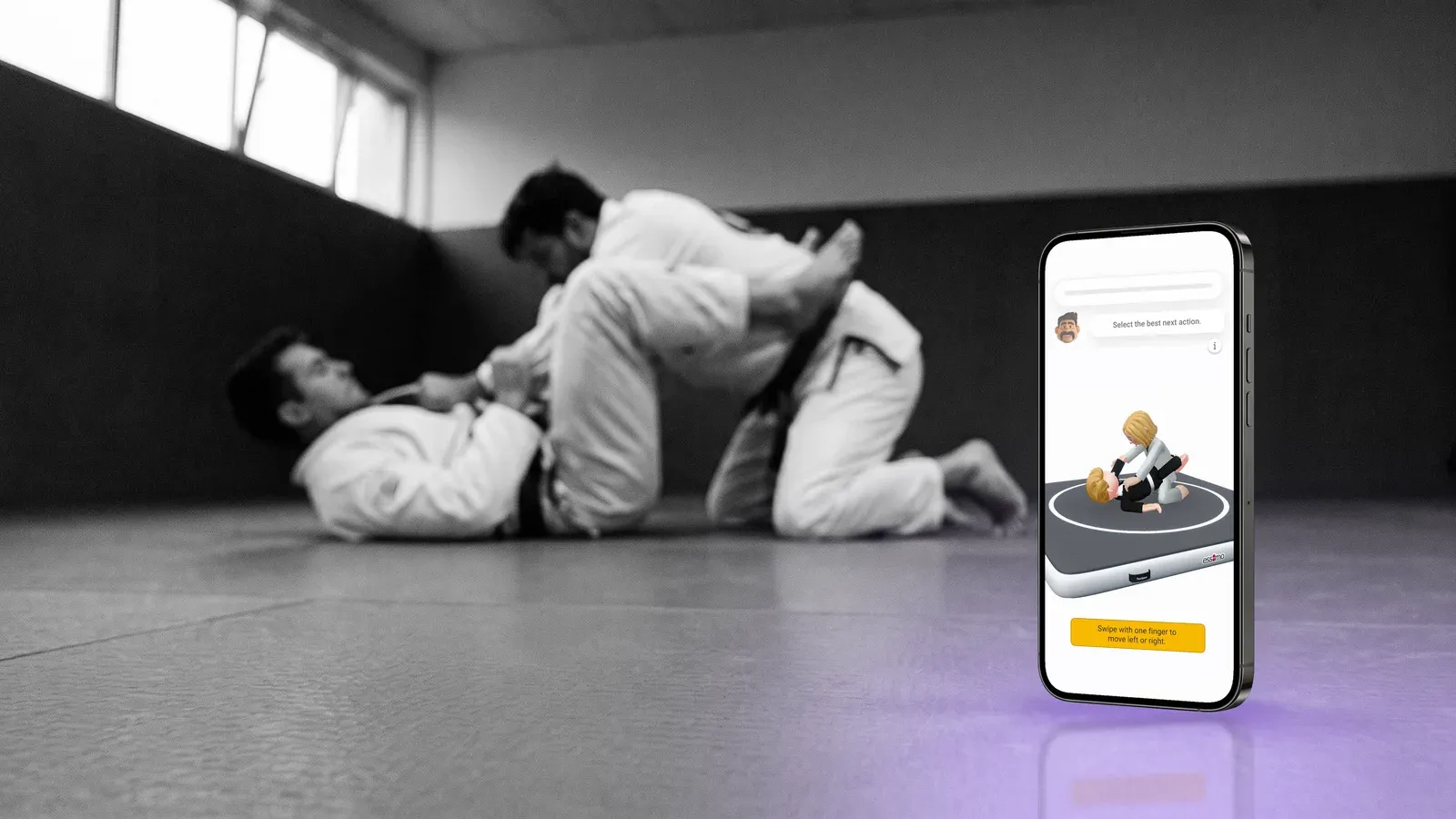
Educational 5 min read
Guard passing is a concept, not a move
Beyond the Mat
You learned three guard passes. None of them work on the person who knows you are coming.
Every white belt hits this. The knee cut worked on Tuesday when your partner was letting it. On Thursday you tried it live and your leg got caught, or they turned into you, or you ended up back in closed guard wondering what you did wrong.
You did not do anything wrong. You just learned a move when you needed a concept.
Passing is a problem, not a technique
Here is the reframe that makes it click for most people.
Your opponent is on their back. You want side control, or knee on belly, or mount. Between you and any of those is a pair of legs. That is it. That is the entire problem. Their legs are in the way, and they can move them.
Every guard pass ever invented is one answer to that one problem. Knee cut, over-under, toreando, leg drag, stack pass, smash pass, long step. Different shapes, same job: get your hips past the line of their knees without giving them your balance on the way.
Once you see it like that, the individual passes stop being a list to memorise. They become options, and the right one is whichever fits the problem in front of you right now.
Three things every pass does
Strip away the names and every good pass does the same three things, roughly in order.
It controls the legs or the hips. You cannot pass legs that are free to follow you. So a pass starts by pinning something: a knee to the mat, both ankles, a hip, a pant leg. If you are trying to pass and nothing is controlled, you are not passing. You are jogging past someone who will simply turn to face you.
It kills their ability to follow. A guard player recovers by turning their hips towards you. Good passers stop that turn, either by pinning the hip, by pushing the knees the other way, or by getting so much weight onto them that turning is not available. This is the step beginners skip, and it is why the pass “almost” works and then evaporates.
It moves your hips past their knees. Not your head, not your arms. Your hips. Beginners reach with their upper body and leave their hips behind, which is how you end up half past guard with your arm being attacked. The pass is finished when your hips are level with or past their hip line and your weight is on them.
If a pass fails, it failed at one of those three. Which one tells you what to fix.
Why the angle you learned it from lies to you
There is a practical reason passing feels impossible in sparring even when you know the steps.
You learned the pass from the side, standing up, watching your coach. In sparring you are on your knees, looking down at a pair of legs that are moving, and the picture is completely different. You cannot see the line of their knees because you are above it. You cannot see where their hips are pointing because their legs are in the way.
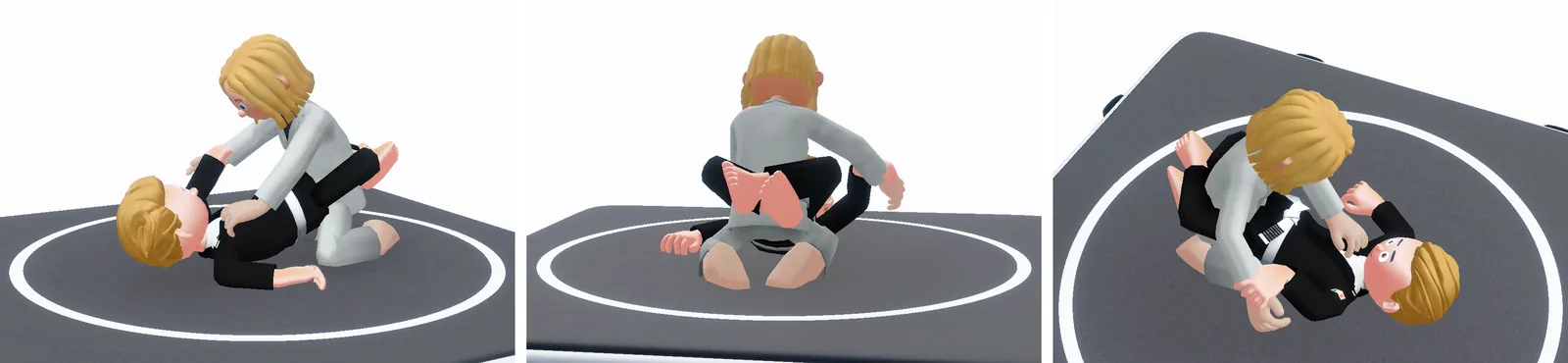
This is where looking at a position from other angles earns its keep. Look at a guard pass from directly above and the whole problem becomes obvious: the legs are a barrier, the hips are what you are trying to reach, and there is a clear path round the outside if you kill the turn. Look at it from underneath and you can see exactly what the guard player is trying to do with their hips to recover. Once you have seen it from those angles, you start to feel them in sparring even though you cannot see them.
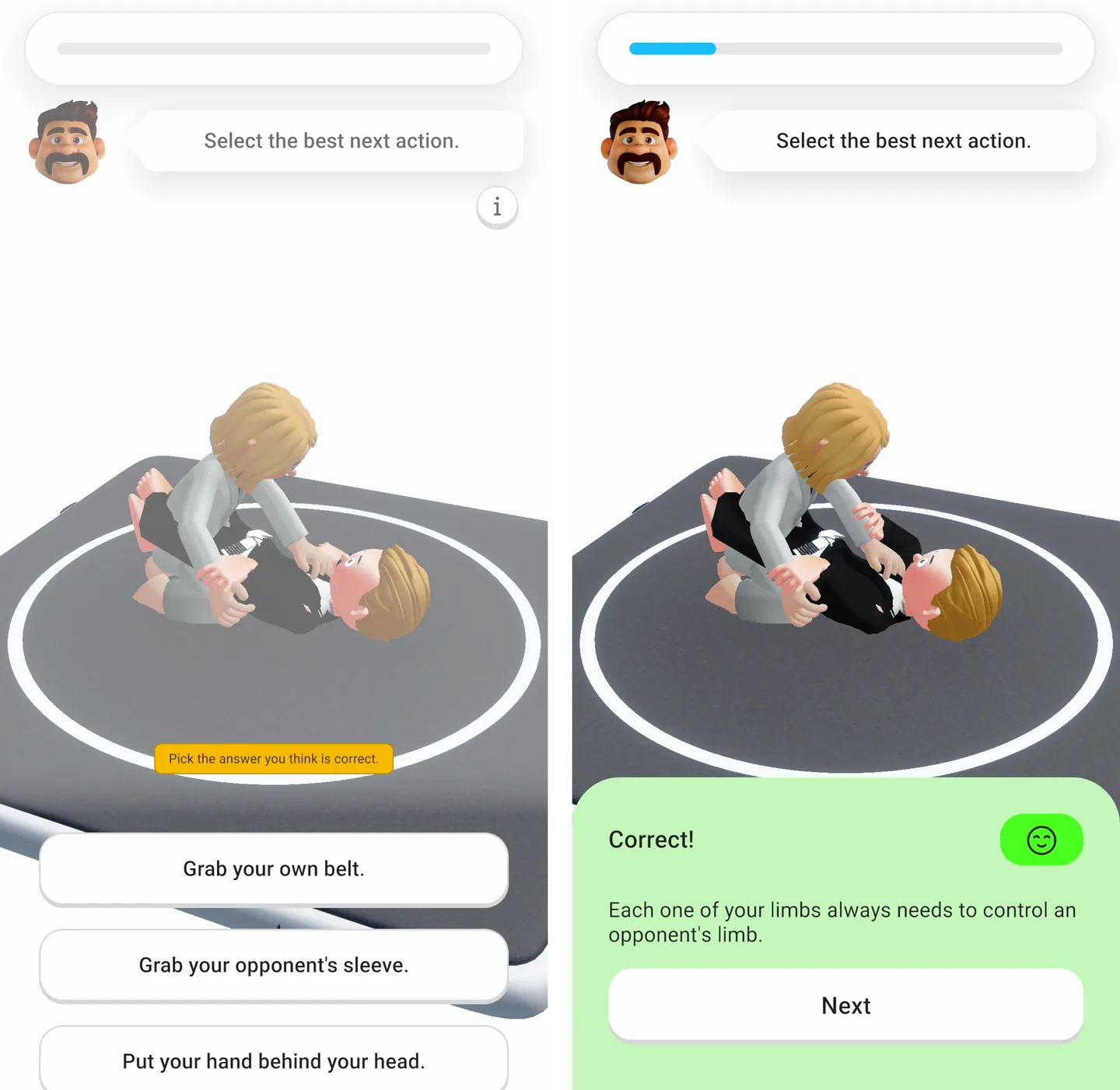
We build every lesson in 3D for this reason. Rotate the guard pass, look at it from above, then from underneath, so you can watch the hips. Then the version your coach shows you from the side finally makes sense.
What to do in your next class
Do not try to learn a new pass. Try to notice the three steps in the pass you already know.
When you start the pass, ask: what am I controlling? If the answer is nothing, fix that before you move.
When it starts to fail, ask: did they turn their hips into me? Almost always yes. Next time, pin the hip or push the knees before you step.
When you get most of the way, ask: where are my hips? If they are behind your shoulders, drive them forward before you reach for the head.
You will still get your pass stopped. But you will know why, and knowing why is the difference between a white belt who is drilling and a white belt who is learning.
The one line to remember
Passing is not something you do to their legs. It is something you do with your hips, once their legs can no longer follow you.
Nkosi covers balance, pressure and top control in the app, and guard passing is where his lessons start. Five minutes, one position, every angle. Free on the App Store and Google Play, at beyondthemat.app.