
Educational 5 min read
How to remember what you learned in BJJ class
Beyond the Mat
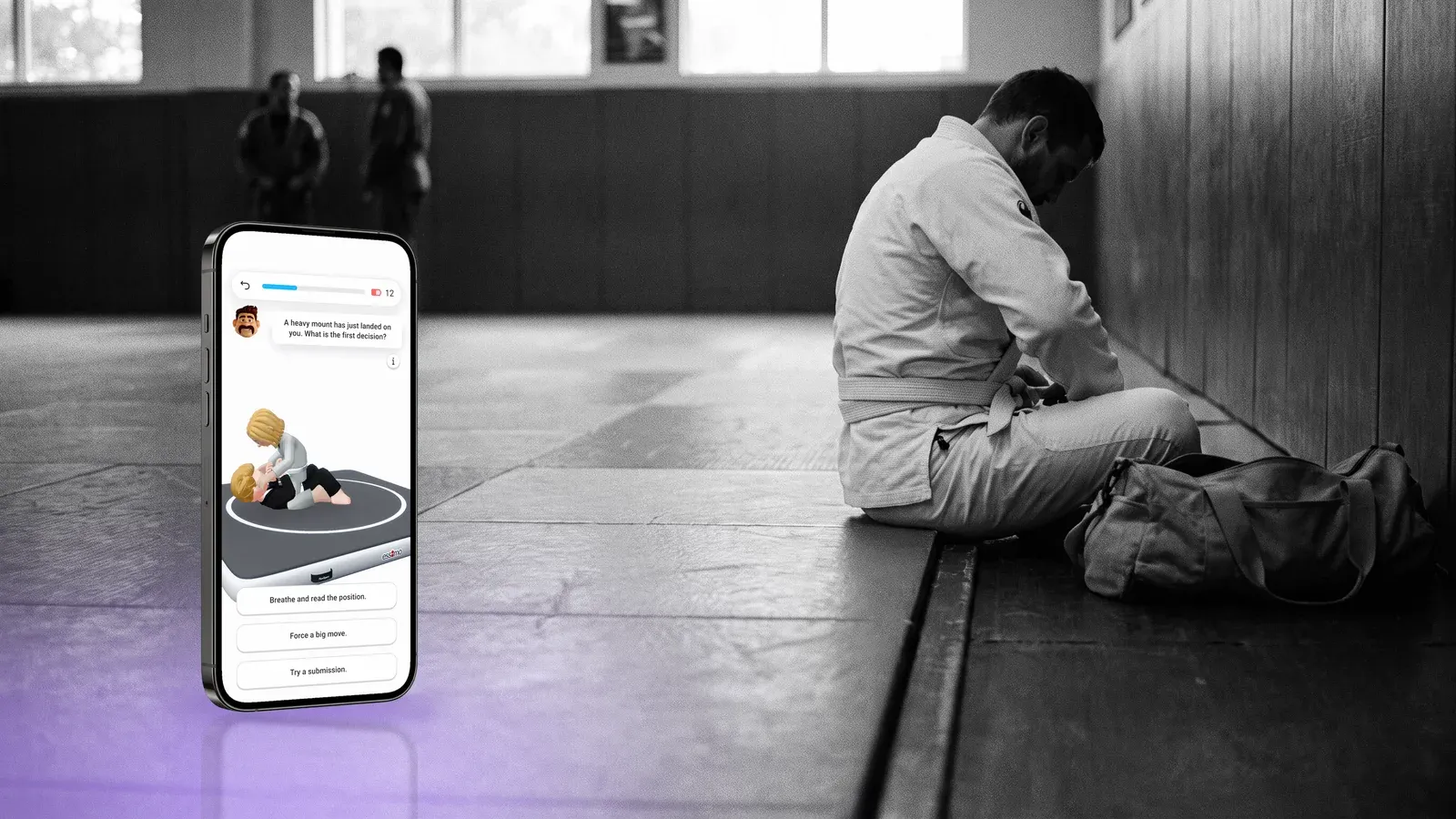
You drilled it on Tuesday. It made sense. By Thursday you could not have told anyone what it was.
Every beginner has this and most of them think it is a personal failing. It is not. It is how memory works for everybody, and once you understand the mechanism you can work with it instead of feeling stupid about it.
The forgetting is normal
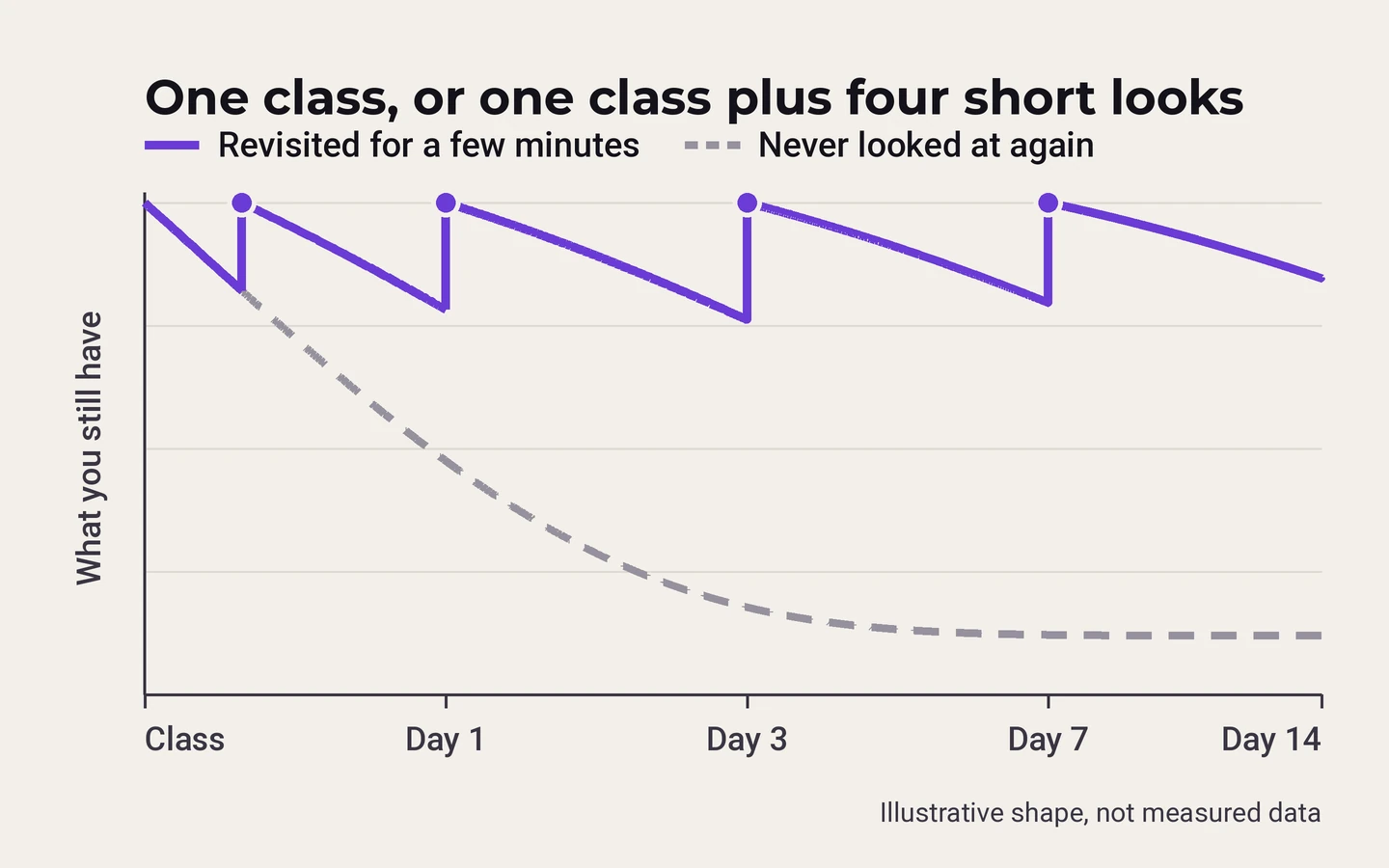
Memory research has said the same thing for over a century: new information fades fast unless you meet it again. The steepest drop is in the first day. After a week without a second look, most of it has gone.
Now look at how a BJJ class is structured. The coach shows a technique. You drill it for ten or fifteen minutes with a partner who is letting you. Then you spar, where you are too busy surviving to try it. Then you go home. The next class is a different technique. You do not see Tuesday’s technique again for weeks, if ever.
That is close to the worst possible schedule for remembering anything. One exposure, no review, replaced by new material before it settled. You are not forgetting because you are bad at BJJ. You are forgetting because nobody arranged for you to remember.
What actually holds a technique in place
Three things, and none of them are complicated.
A second exposure, soon. The single most effective thing you can do is meet the technique again within a day. Not drill it for an hour. Just see it again, think it through, and check you still have it. That one revisit changes the shape of the forgetting: the fade is slower and the next revisit can be further away.
Understanding rather than sequence. A technique remembered as a sequence of steps (“hand here, then knee here, then turn”) is fragile. Miss one step and the whole thing collapses. A technique remembered as a reason (“I am turning their hips away so they cannot follow me”) survives, because you can rebuild the steps from the reason. When you review, ask why each step exists. If you cannot answer, that is the thing to ask your coach next time.
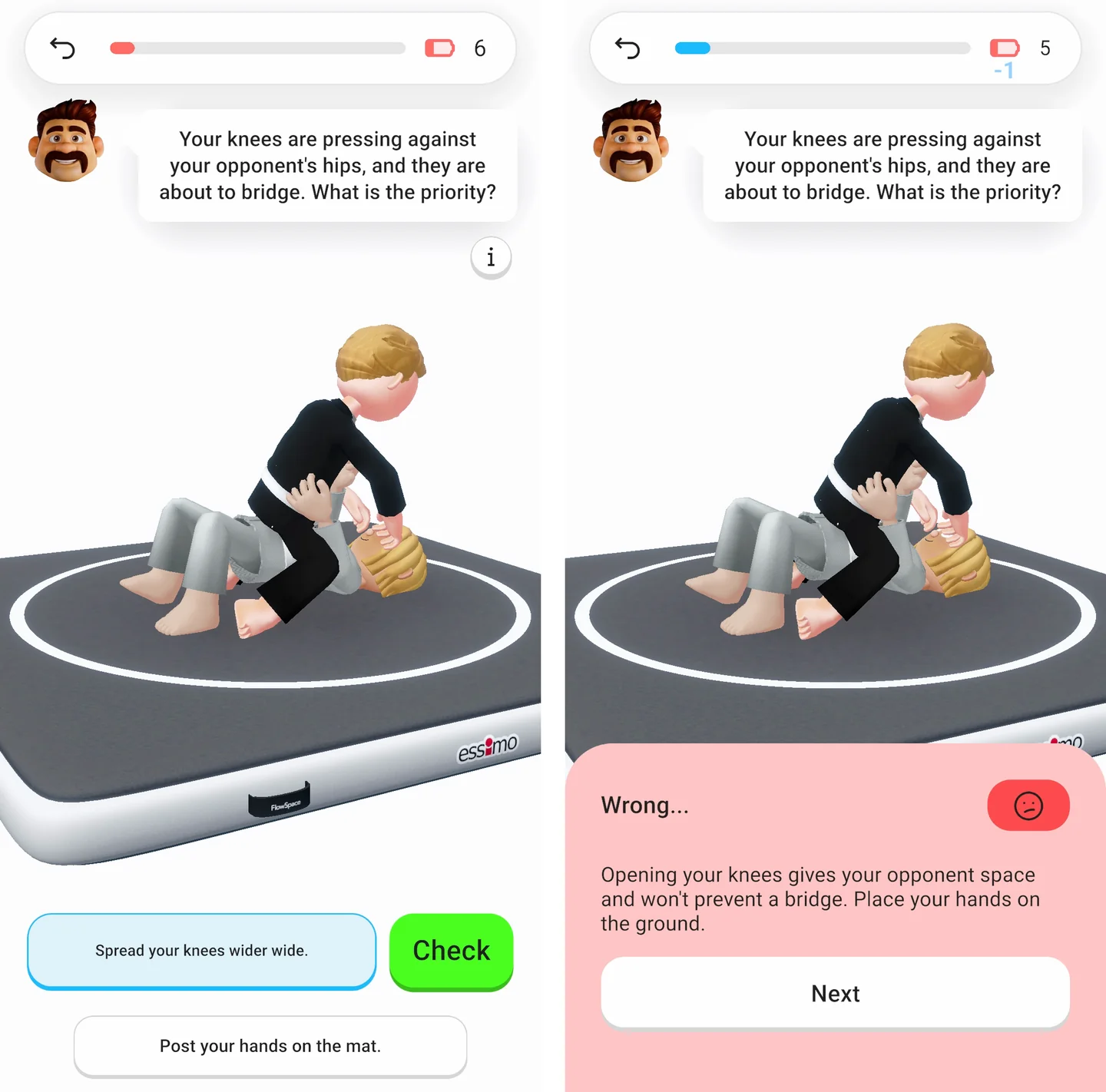
Testing yourself. Reading your notes is weaker than asking yourself a question and trying to answer it. What is the first thing to do from under side control? Where does my near arm go? If you can answer without looking, it is yours. If you cannot, you have found exactly what to review, which is more useful than a comfortable read-through.
A routine that takes five minutes
Here is what we would suggest to anyone in their first year. It fits in the gap between getting home and dinner.
The evening after class, write two lines. The position, and the one detail the coach kept repeating. Add a third line if something specific went wrong in sparring. That is the whole journal. Anything longer and you will stop doing it within a fortnight.
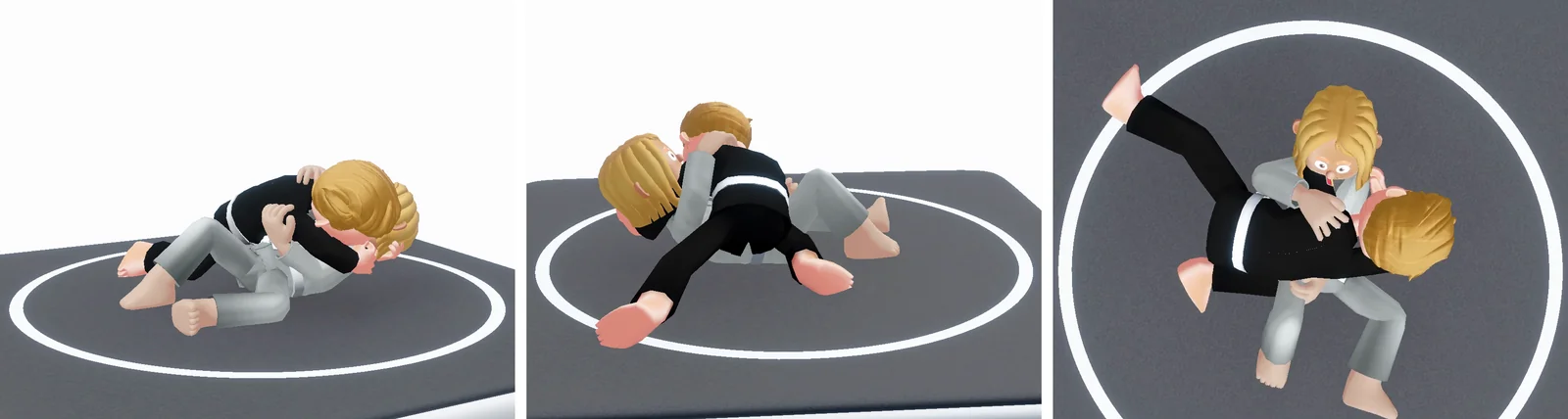
The next day, read the two lines and picture the position. Where are you, where are they, where is the weight. If you can, picture it from a different angle than the one you learned it from. From underneath if you learned it standing, from above if you learned it lying down. This is odd advice but it works, because sparring will put you in angles the demonstration did not.
Two days later, ask yourself the question rather than reading the answer. Then a week later. Then let it go and trust it.
Five exposures, none longer than a few minutes, spaced over a week. That schedule beats an hour of drilling on one night, and it is the reason the app is built as one short lesson a day rather than a library of long videos.
Why we built it this way
Beyond the Mat is a five-minute lesson a day for exactly this reason. Not because we think five minutes is enough to learn BJJ, but because five minutes on Wednesday is what stops Tuesday’s class from disappearing.
Each question puts you in one position, lets you rotate it and look at it from the angle you will actually experience, and then asks you what to do. Getting a question wrong is not a failure, it is the app finding the gap for you. Flow, the count of right answers in a row, and the stars you earn are there so that showing up feels like progress, because it is.
You could do all of this with a notebook and some discipline. Plenty of good grapplers have. The app is for the rest of us, who need the reminder to arrive on its own.
The short version
Forgetting is the default. One revisit inside a day changes it. Remember reasons, not sequences. Test yourself instead of re-reading. Keep it to five minutes so you actually do it.
Your first weeks in the app are built around exactly this: short lessons that test you, and a reason behind every answer. Free on the App Store and Google Play, at beyondthemat.app.