
Community 5 min read
What your child is learning in kids BJJ when it looks like play
Beyond the Mat
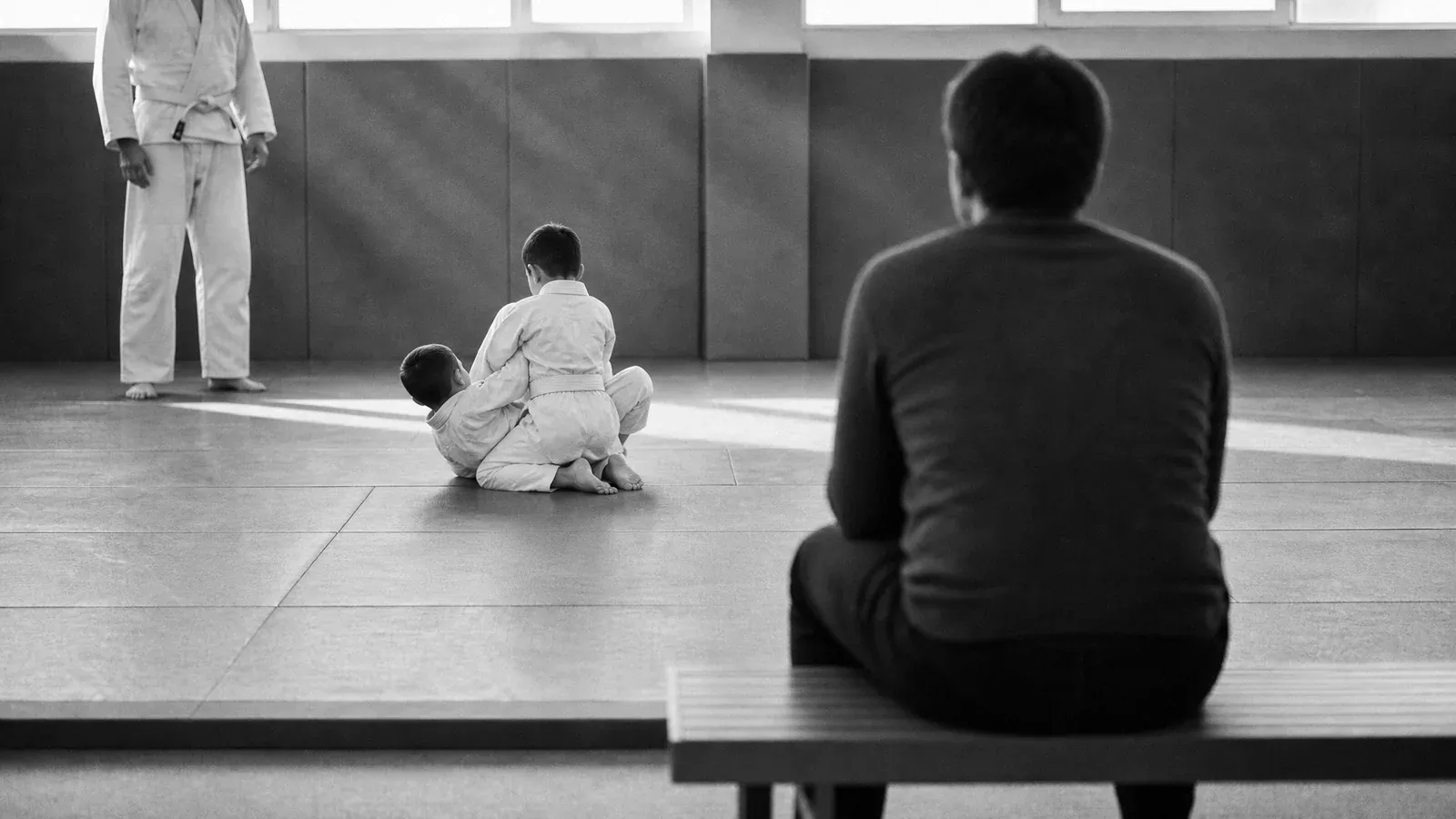
From the side of the mat it looks like two kids rolling around and occasionally laughing.
A lot of parents sit there for a year with the same quiet question: what is my child actually getting from this, and how would I know?
Here is an honest answer, from people who train and who spend their days thinking about how beginners learn.
It is play. That is the method, not a problem
Kids BJJ classes are built around games for a reason. Tag on your knees, sumo in a circle, “steal the belt”. These are not warm-ups before the real lesson. They are the lesson, disguised.
Every one of those games teaches a grappling skill without naming it. Staying on your feet when someone is pushing you. Getting up quickly. Keeping your balance while moving. Using your legs, not your arms, to make space. Children who spend a year playing those games arrive at technique already knowing what their body should do. The coach just gives it a name.
So if you have been wondering when the “proper” jiu-jitsu starts, it started on day one.
What is actually being learned
Underneath the games and the drilling, four things are happening, and only one of them is about fighting.
Solving a problem while someone stops you. This is what grappling is. Your child wants to get up, or get on top, or get their arm free, and another child is actively trying to prevent it. There are very few places in a child’s week where they practise this. School problems sit still. A training partner does not.
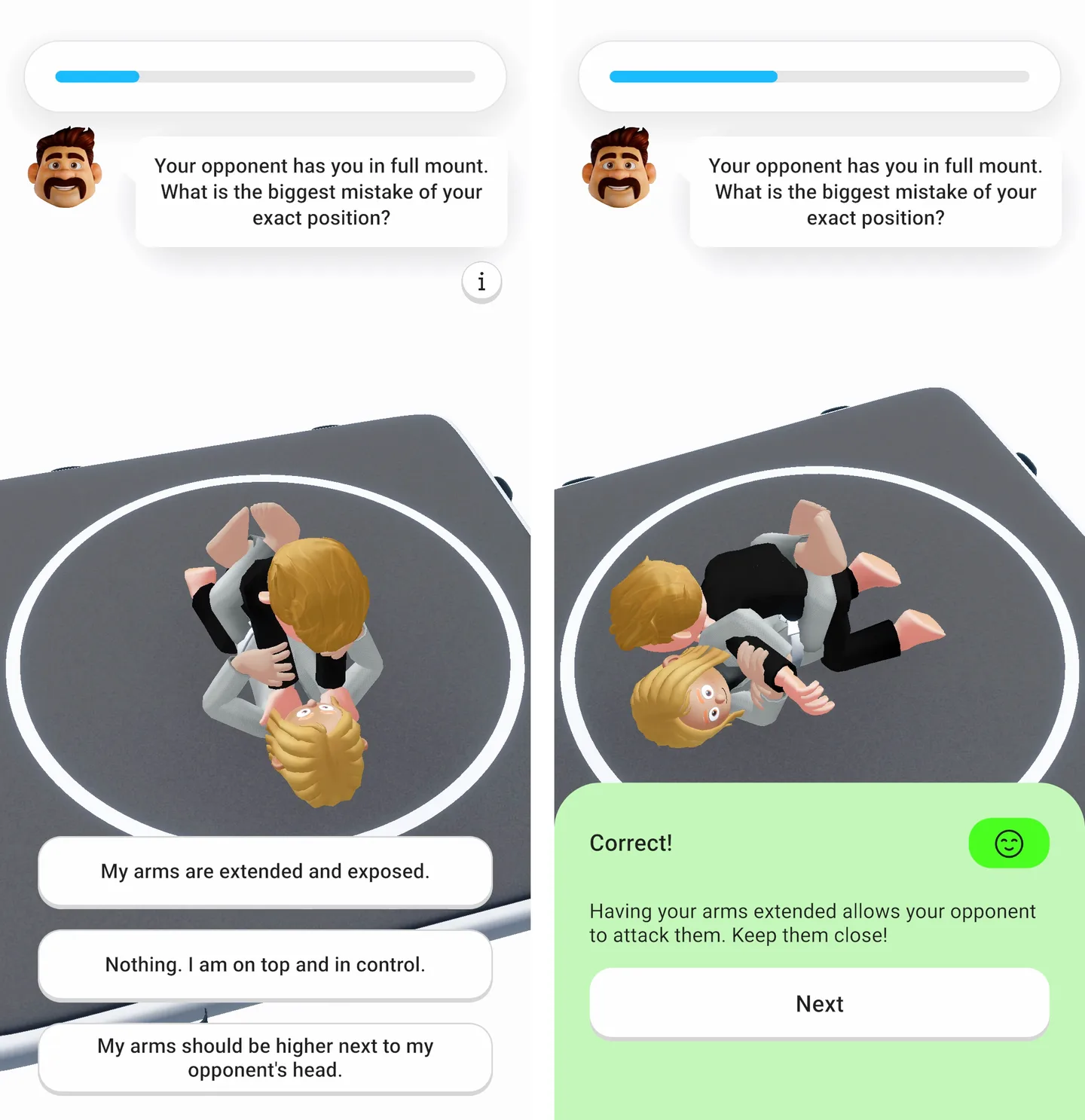
Staying calm under pressure. Being pinned flat by someone heavier, with their weight on your chest, is uncomfortable. Children learn, quite quickly, that panicking and pushing makes it worse and that breathing, waiting and moving your hips makes it better. That lesson transfers. Parents tell us about it more than anything else.
Losing without falling apart. In sparring, everyone loses, often, in front of other people. Then they shake hands and go again. A child who does that thirty times a term is learning something about failure that no amount of talking about resilience will teach them.
Looking after a partner. You cannot train without someone to train with, and you cannot keep training partners if you hurt them. Children learn to control their strength, to let go when someone taps, and to help a smaller partner get better. Coaches enforce this hard, because the whole class depends on it.
The actual techniques, the escapes and sweeps and pins, are real and your child will learn them. But they are the vehicle. The four things above are the cargo.
What to watch for from the bench
Belts and stripes come slowly and tell you very little week to week. Watch for these instead.
Do they keep working when they are pinned, rather than going limp or getting upset? That is resilience forming, and you can see it change over a few months.
Do they use their legs and hips to make space, rather than pushing with their arms? That is technique quietly arriving, usually before they can explain it.
Do they shake hands and go again after a round that went badly? That one matters more than any win.
Do they help a newer or smaller child? Coaches notice this and so should you.
If you see one of those in a class, that was a good class, whatever the scoreboard said.
How to talk about it at home
The hardest part for a parent is that you cannot help with something you do not understand. You can quiz spellings. You cannot quiz side control.
Two things help.
Ask about the problem, not the result. “Did you get stuck anywhere today?” opens a better conversation than “did you win?”. Children love explaining what someone did to them and what they tried in return.
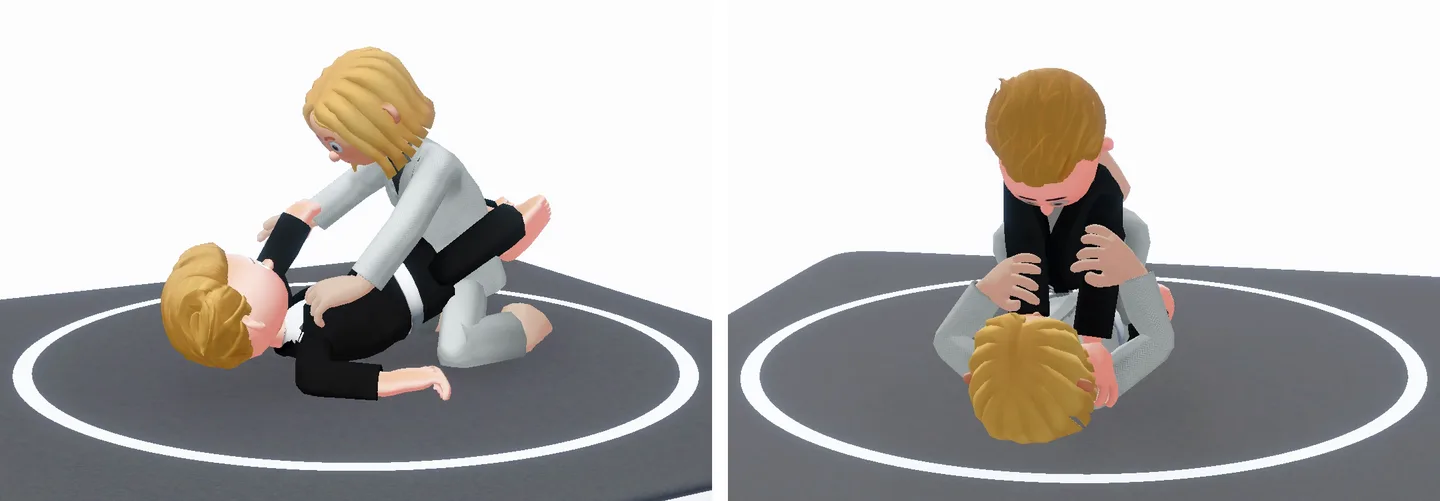
Learn a little of the vocabulary. Guard means they are on their back with their legs between them and the other person. Mount means someone is sitting on top. Sweep means turning bottom into top. A tap is the signal to stop. With ten words you can follow most of what your child tells you, and they will notice you understand.
Where an app fits, and where it does not
Beyond the Mat is built to make what the coach showed stick between classes. For a child, that means a short 3D lesson they can turn around with their finger, a few questions to check they got it, and a coach character who reacts when they get it right. It is five minutes, it is free, and it is the sort of thing that gets done on a Sunday while waiting for lunch.
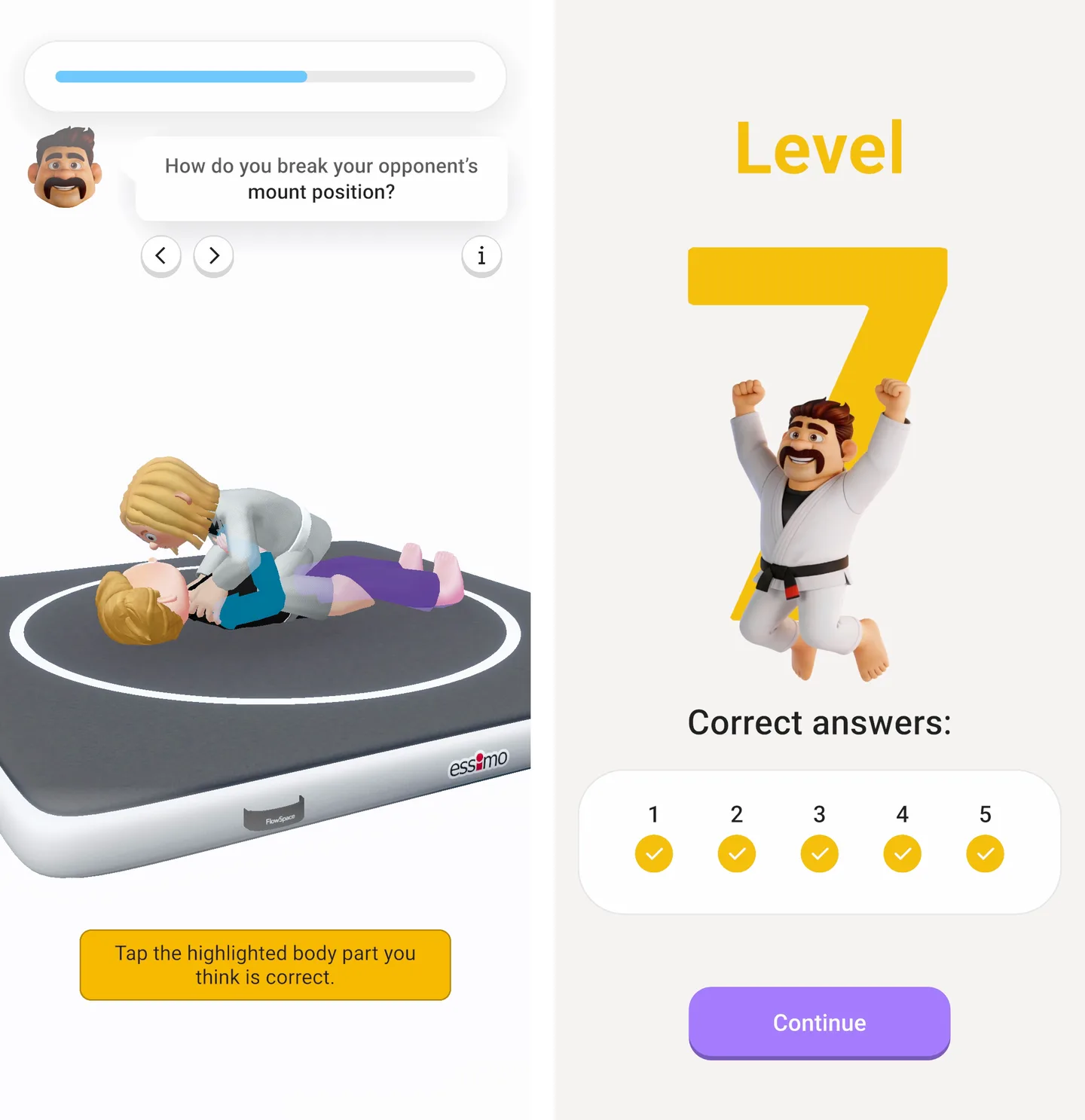
For you, it means you can see what they are working on and what they have understood, instead of guessing from the bench.
It is not a substitute for the club and it never will be. Nothing on a screen teaches a child to stay calm under a heavier partner. The mat does that. The app just makes Tuesday’s lesson still be there on Thursday.
If your child trains, have a look at the parents section on beyondthemat.app. And next class, watch for the handshake after a bad round. That is the thing you are paying for.