
Thought leadership 5 min read
Your students forget between classes. That is a memory problem, not a coaching problem.
Frames. Hips. Where your weight is. Why you do not push with your arms.
Ask any coach what they say most often and it is some version of that list. A large share of every fundamentals class goes on re-explaining the same handful of concepts to people who heard them last week and have already lost them.
I want to make an argument that this is not a coaching failure, that it is not really a student failure either, and that the fix sits in a place most clubs are not looking.
The gap is where students are lost
Think about a beginner’s week. Two classes, maybe three, each about ninety minutes. Between them, somewhere between forty and a hundred and twenty hours of not doing BJJ.
Everything the coach built on Tuesday has to survive that gap on its own. It mostly does not. Memory research has said the same thing for a century: one exposure to new material, with no revisit inside a day or two, and most of it is gone by the next week. The class is not the problem. The class is the only part of the week that is working. The problem is the silence around it.
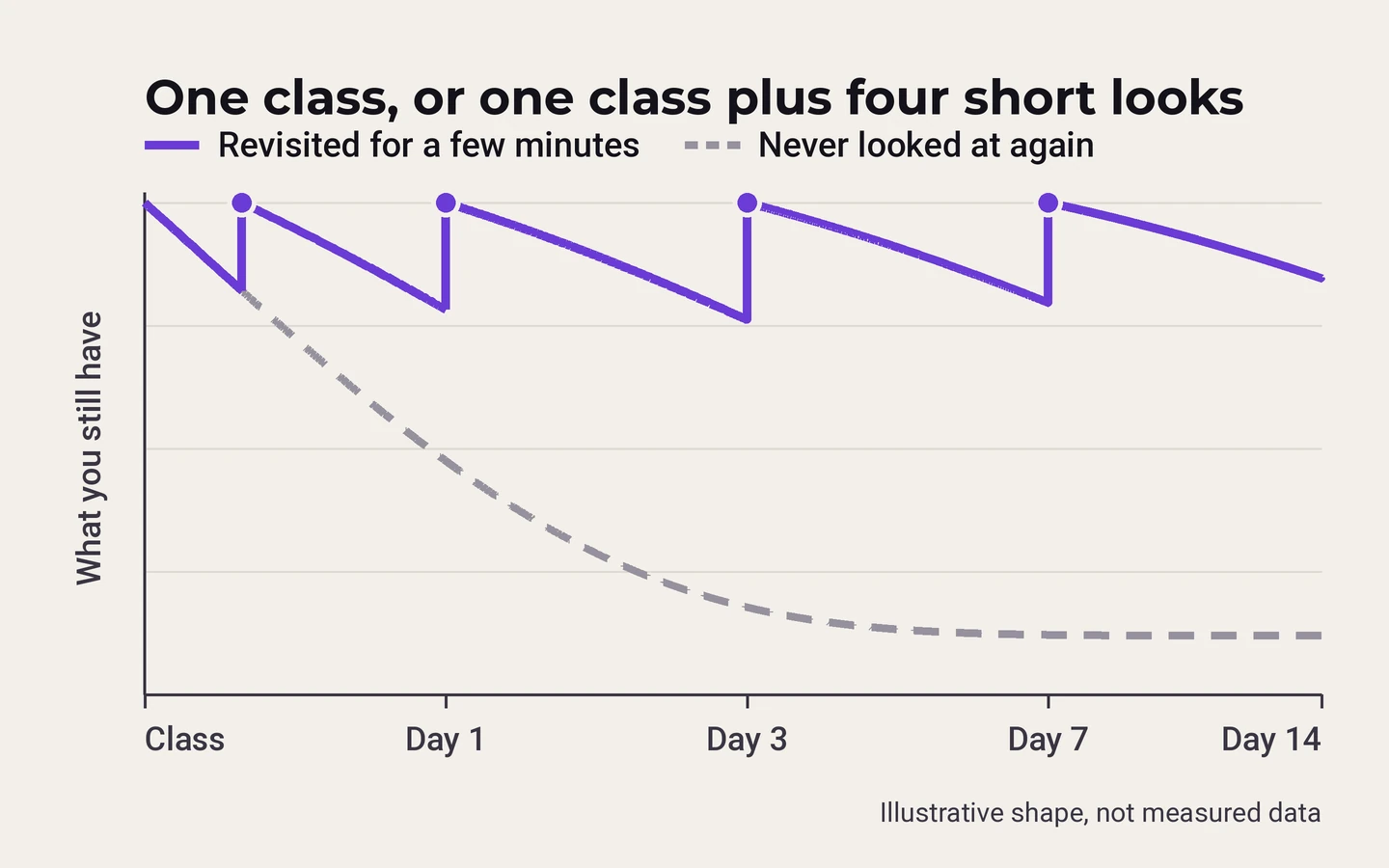
So the student arrives on Thursday having lost most of Tuesday, the coach re-explains frames, and the cycle continues until the student concludes they are not getting anywhere. Over 80% of them then leave before blue belt. Not because they were soft. Because they could not see progress, and quitting is what a sensible person does when the evidence says nothing is changing.
Why more mat time does not fix it
The instinct is to add. Another fundamentals class. An open mat. A beginners’ course with a syllabus.
These help, and clubs that run a structured, cycling fundamentals curriculum retain better than clubs that teach whatever the coach fancies that night. But they are all more of the same thing: more exposure inside the building. They do nothing about the gap, because the club is not present during the gap.
The other instinct is content. Record the class, share a YouTube link, point students at an instructional. Also reasonable, also limited. Video is one angle, at one pace, with no way of knowing whether the student understood or just watched. And the beginner does not have the knowledge to know which part of a forty minute video mattered.
The gap needs something small, frequent and specific to what was taught. Not more.
What the good clubs already do
None of this is new. The clubs I have spoken to that hold onto beginners tend to do a version of the same three things, usually without calling it a system.
They repeat on a cycle, so a concept comes back before it has fully faded. Frames this week, frames again in three weeks, in a different position.
They make progress visible on a shorter timescale than stripes. A checklist. A curriculum board. A coach who says “you got that escape today, you did not have it last month” out loud in front of the class.
And they give students something to do between sessions. Homework, in effect, even if it is just “watch this one clip and tell me what the bottom person’s hips are doing”.
The problem is that all three cost coach time, and coach time is the scarcest thing in a club. Which is where I think software has a legitimate job, and where I should say what we are building.
What we are building for clubs
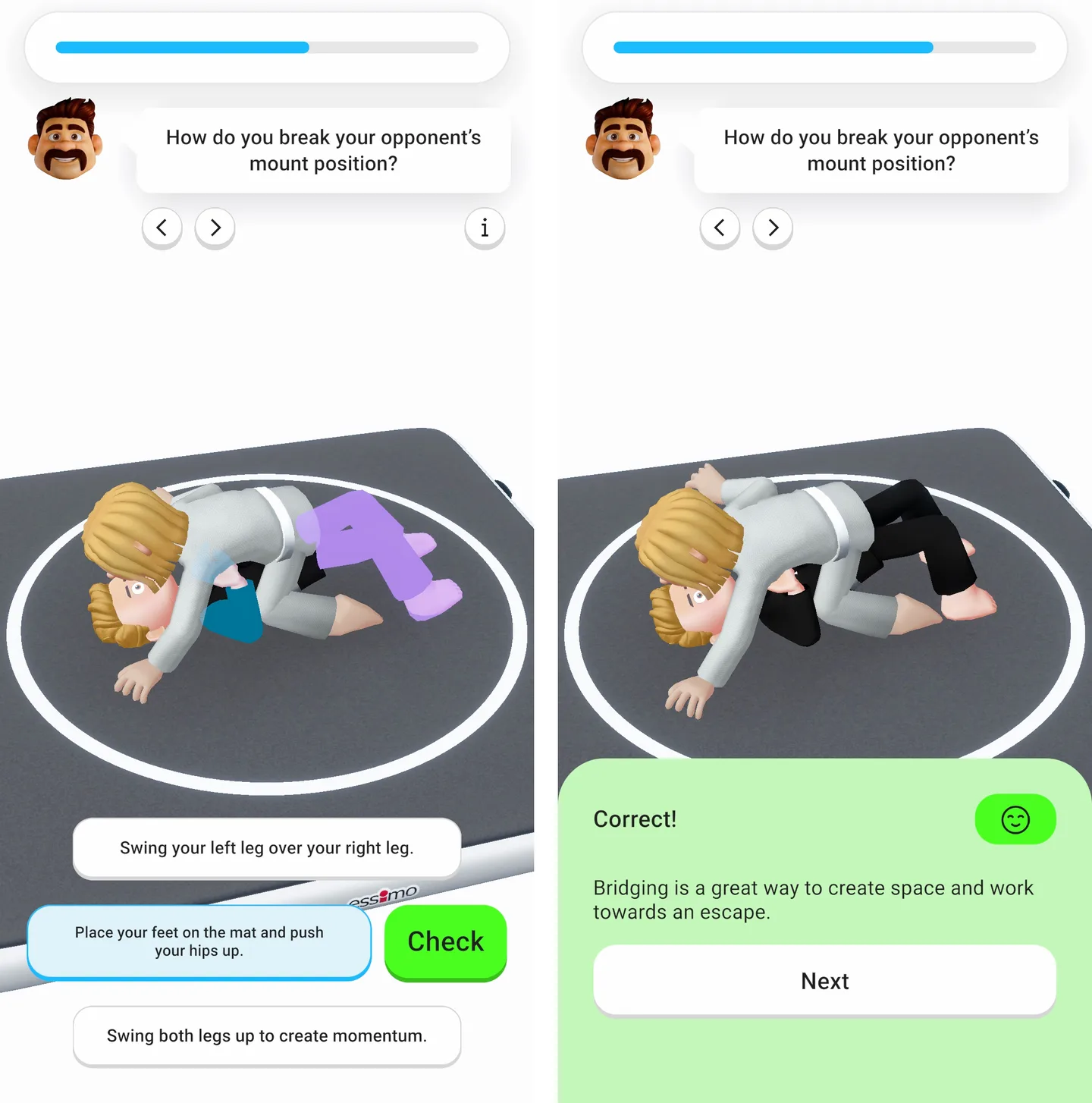
Beyond the Mat is a five-minute-a-day app for beginners. One position per lesson, built in 3D so the student can rotate it and look at it from underneath, where the weight is. Then questions, so the student finds out whether they understood it rather than just watched it. Streaks and levels so that doing it every day shows up as progress.
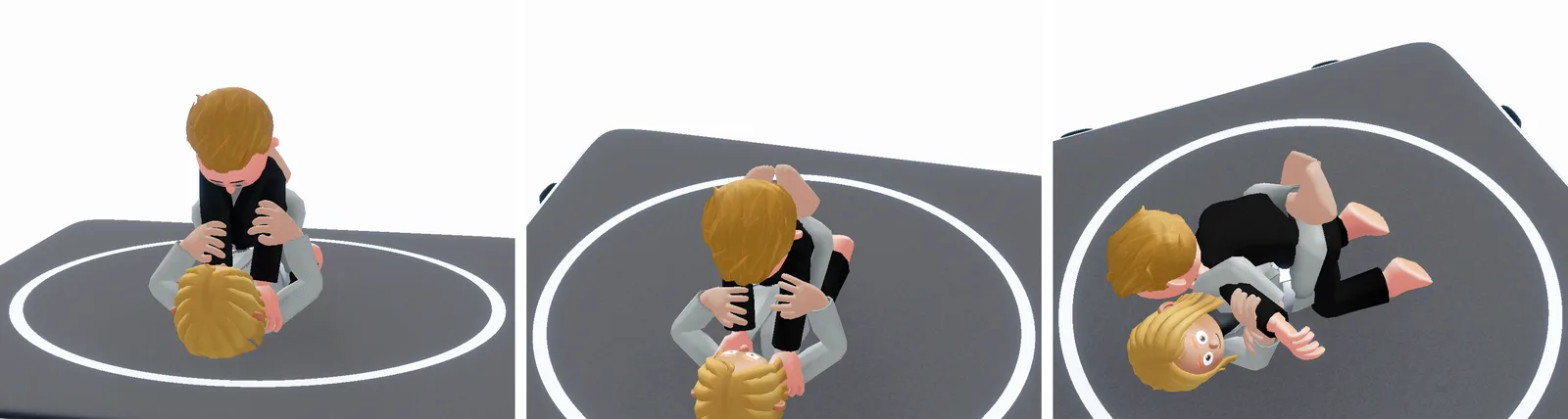
That is the student side, and it is live on iOS and Android now.
The club side opens in 2027, and it is free for coaches. Set up your club, invite your members, and see what they have actually worked on and understood between classes. If half your white belts got the side control escape question wrong this week, you know what Thursday’s class should start with. If a student has not opened the app in a fortnight, you know who to talk to before they drift off.
What it does not do
It does not teach your students BJJ. You do. A screen cannot make someone comfortable under a heavier partner, and an app that claimed otherwise would be lying.
It does not replace your curriculum. It follows it. The lessons are concepts, positions and fundamentals, the same things you are already re-explaining, presented in a way that survives the gap.
And it does not take a cut of your members. The club tools stay free. The app makes its money from an optional subscription that individual practitioners choose or do not choose, and that is the whole model.
Why free
I get asked this by every coach, usually with some suspicion, so here is the reasoning.
Beginners quit because they are confused. Confusion is best fixed between classes. The people who can put the app in front of a beginner at the right moment are coaches. So coaches are our distribution, and charging your distribution is a bad idea even before you consider that most clubs run on very little margin. If our tools save you an hour a week of re-explaining frames and keep a few more white belts around long enough to become blue belts, the club is better off and so are we.
If you run a club, join the waiting list at beyondthemat.app and choose “A coach or club owner”. We will be in touch before they open, and I would rather hear what you actually need than guess.